Watering Globes for Plants: How They Work & When to Use Them
WaWatering globes are glass or plastic bulbs with a long stem that slowly release water into potted soil. They work through air exchange: as the soil dries, air enters the stem and lets water flow out. This way, plant watering globes keep the soil moist for several days, up to about two weeks. They’re handy for short trips and small to medium pots, but they don’t replace regular watering. Thirsty plants in large pots empty a globe fast, and succulents can rot from constant moisture. A gardening app with watering reminders helps you refill the globe before the soil dries out. Below you’ll learn how to use self-watering globes, how to keep the stem from clogging, and which plants benefit most.
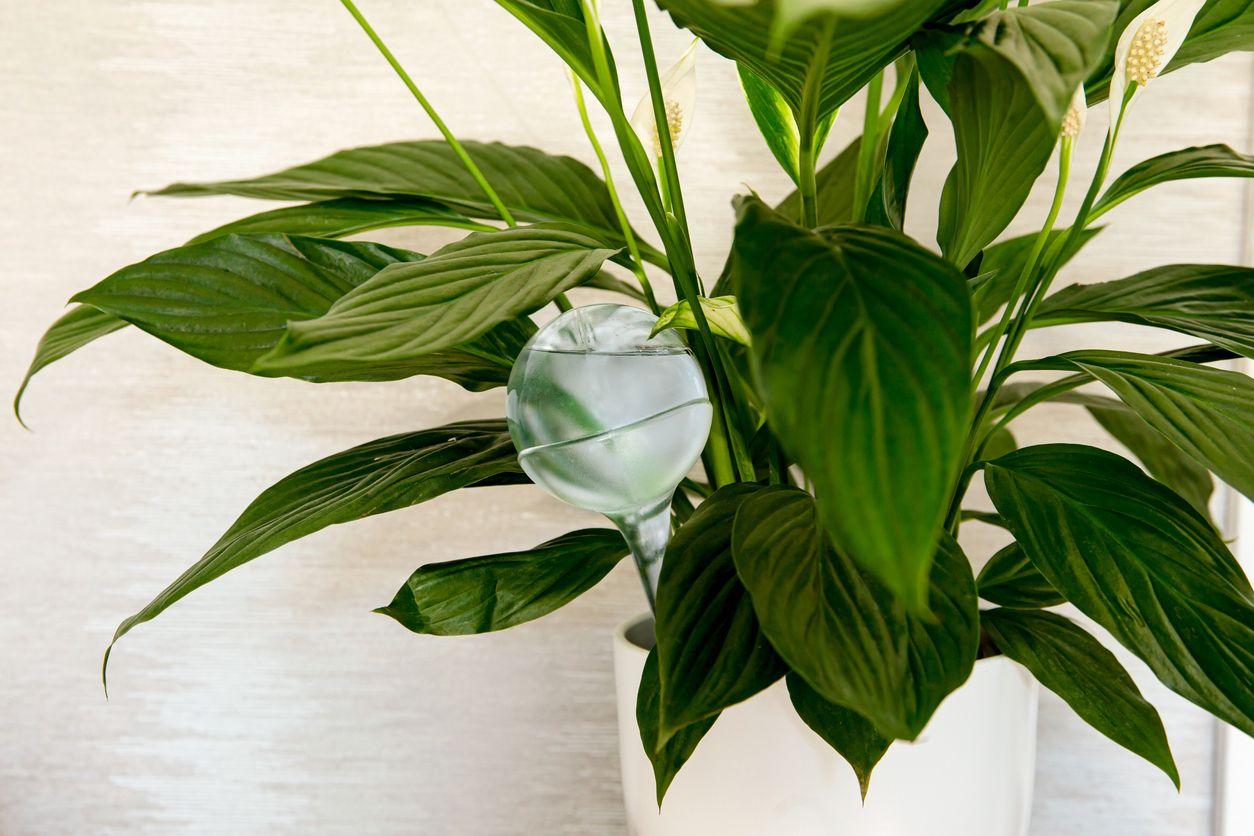
What Is a Water Globe Used For?
It is convenient to use a watering bulb for plants when you leave home for a long time, and your green pets are alone. However, this is also a good tool to optimize your time and spend less effort on plant care. Self-watering globes are usually made of colored glass. You need to fill the ball with water and stick the "leg" of the device closer to the stem into the soil. How often the water will drop into the soil depends on the angle at which you insert the handle.
So how do watering globes work? The principle is straightforward: when the potting mix of your plant dries out, the watering globe receives oxygen from it. It releases a certain volume of water that goes into the soil.
What Are The Advantages Of Watering Globes?
If you take precautions and use plant watering globes correctly, they will have many benefits for you:
- low price — ordinary watering globes cost a bit. Also, they are not so hard to find in stores;
- reusable — you can use water globes for plants a lot, just once in a while cleaning it;
- easy to use — you just pour the water in the ball and insert it into the ground;
- self-watering globes soften the water absorbed by the plant;
- can be used for plants that like moist soil, usually do you can not worry about watering;
- excellent as a backup watering option in case of an extended vacation;
- you can choose a ball that will fit aesthetically into the design of your home.
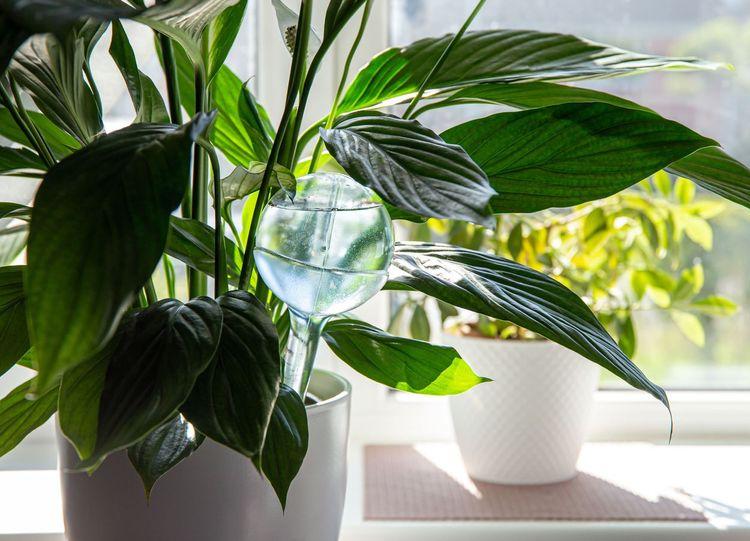
Are There Any Disadvantages?
Of course, any tool can be harmful under the wrong conditions of use. Here are the potential dangers of watering globes:
- if you insert a ball into a plant that does not like constantly moist soil, its roots will rot;
- self-watering globes can usually be in use for no longer than 2 weeks, note that the soil and the plant do not absorb water faster. Hence, you must check them before leaving the plant alone;
- watering bulbs are pretty heavy, so they can tip pots with small plants;
- it is vital to clean the globes periodically, which is quite tricky — you need specific accessories that can crawl through a small hole;
- glass water globes might be dangerous if you have pets or children as they can break them and get injured by a stake at incorrect use.
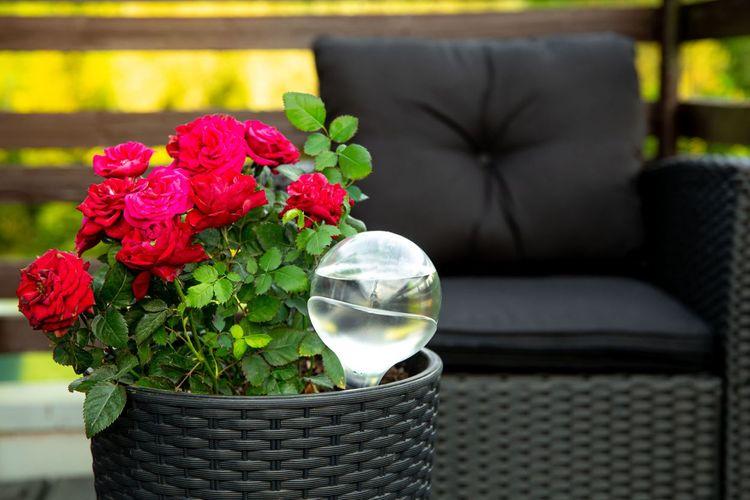
What Are The Alternatives To Watering Globes?
Plant watering globes is not the only way to make the plants water on their own. If, for some reason, watering bulbs don't suit your needs, you can try something else. Here are the alternatives:
- DIY-balls for watering from glass and plastic bottles or even lamps. They are free, but you need to make them by yourself (don't worry, it's actually easy) and check if they work correctly.
- You can create a drip irrigation system on your own using gauze or a wick that will transfer moisture from a vessel filled with water. It will take effort to create this system, and then all the plants must be in one place in the apartment, or you will need to organize several such systems.
- Self-watering pots. There is a danger of overwatering for plants that do not need constantly moist soil. But if you are an owner of water-loving greenery, it might be one of the best choices.
- Electronic irrigation systems. This is a relatively expensive option, compared with the other ones. It will come in handy if you regularly leave your plants alone for a long time.

FAQ
Do watering globes work?
Yes, watering globes work for small and medium potted plants that like evenly moist soil. They release water slowly as the soil dries, so they cover short gaps of several days. They can’t fully water a large or thirsty plant, so think of them as a backup between regular waterings, not a replacement.
How do watering globes work?
Watering globes work through air and water exchange. While the soil around the stem is wet, the water stays inside the bulb. When the soil dries, air enters the stem and bubbles up into the globe, letting a small amount of water flow out. This cycle repeats until the globe is empty.
How to use watering globes?
Water the plant thoroughly first, so the soil is evenly moist. Poke a hole with a pencil or chopstick about two-thirds of the way down the pot, between the stem and the rim. Fill the globe, cover the opening with your thumb, flip it, and push the stem into the hole.
How long do self-watering globes last?
Self-watering globes usually last from a few days to about two weeks per fill. How long depends on the globe’s size, the pot, the soil mix, room temperature, and how much water the plant uses. A small globe in a large pot of a fast-growing plant may empty in one or two days.
Why is my watering globe not draining?
A watering globe that won’t drain usually has a stem clogged with soil, or the soil around it is still wet. Pushing the stem into dry soil packs earth into the tip. Rinse the stem with a thin brush or pipe cleaner, and always pre-drill the hole in moist soil before you insert the globe.
Are watering bulbs good for succulents and cacti?
No, watering bulbs are a poor choice for succulents and cacti. These plants need their soil to dry out completely between waterings, and constant moisture at the roots can lead to root rot. Water globes suit moisture-loving houseplants like ferns, peace lilies, and calatheas better. If you’re unsure about your plant, you can ask a botanist.