Cactus Identifier: Types of Cactus with Names & Pictures
Identify any cactus from a photo, browse types of cactus with names and pictures, and get care tips for each species.
216
Cacti are succulent plants from the family Cactaceae. Coming from the Americas, they can be found as houseplants worldwide. Most species have stout green stems to store water and spines instead of leaves to reduce the risk of being eaten. Nonetheless, there is an outermost variety of these plants, so identification might be not that effortless. Follow our cactus identification guide to find out what species you have.
What Kind of Cactus Do I Have?
The habitats of cacti vary, and so do these plants. Here are general types of them:

Flowering
Not all cacti can bloom. Some can even produce fruit (like dragon fruit), but it’s rare indoors. They require a lot of sunlight and a cold, dry dormancy period in winter to blossom.
Cactus with long leaves
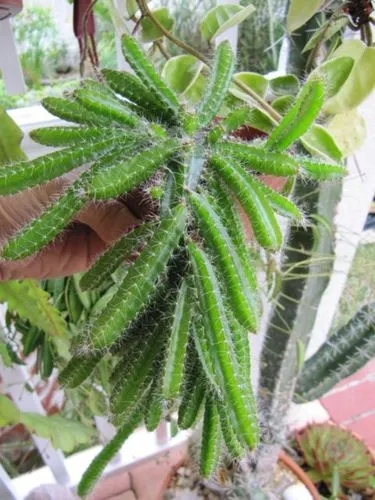
Most cacti don’t have leaves at all. Schlumbergera (Christmas cactus), Epiphyllum (orchid cactus), and some other epiphytic cacti have stem segments that look like long leaves.
Cactus with long spines
Many cacti have long spines, for example, Ferocactus or Echinocactus. Nonetheless, some grow long but soft spines like Tephrocactus aricalatus or Parodia leninghausii.
Columnar cactus identification
Columnar cacti, or ceroids, can be found in many genera. However, they are commonly found in the Cereus genus.
Moon cactus
Moon cactus is a Gymnocalycium mihanovichii that doesn’t have chlorophyll to photosynthesize. So, the only way to survive is by grafting on another cactus that provides them with nutrients. They come in many colors and varieties.
Prickly Pear
Bunny Ears, or Opuntia, is an extensive genus of cacti. If your plant has oval, round or flat elongated segments — it’s Opuntia. The most popular species are Indian fig opuntia and bunny ear cactus.
- Important
How to Identify Cactus Plant
The easiest choice to identify a plant is by using the app by PlantIn. In case you want to do it yourself, follow these steps for identification:
Examine the plant
Make a list of cactus characteristics you observe
Look in the guideline book to see what species possesses these features
Find reference pictures on the Internet to confirm you have found the right plant
- Important
Cactus Identification Characteristics
Stem shape and size
Shape and number of ribs
Color and texture
Spines, their color, and the number growing from one spot
Presence of segments or offspring
Flowers
Often, it’s incredibly challenging to identify a plant on the spot because there are many things to consider! Using an app to define the species helps you to do it quickly and accurately.
- Important
Cactus identifier App & Web Tool
Still in two minds? Here are some reasons why you should use the PlantIn identifier:
It’s easy and free
It doesn’t require any extra time or effort
Do several taps, and you get the results
You don’t have to compare thousands of pictures manually or read guidebooks
Our AI works equally good or even better than a botanist